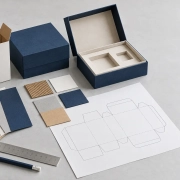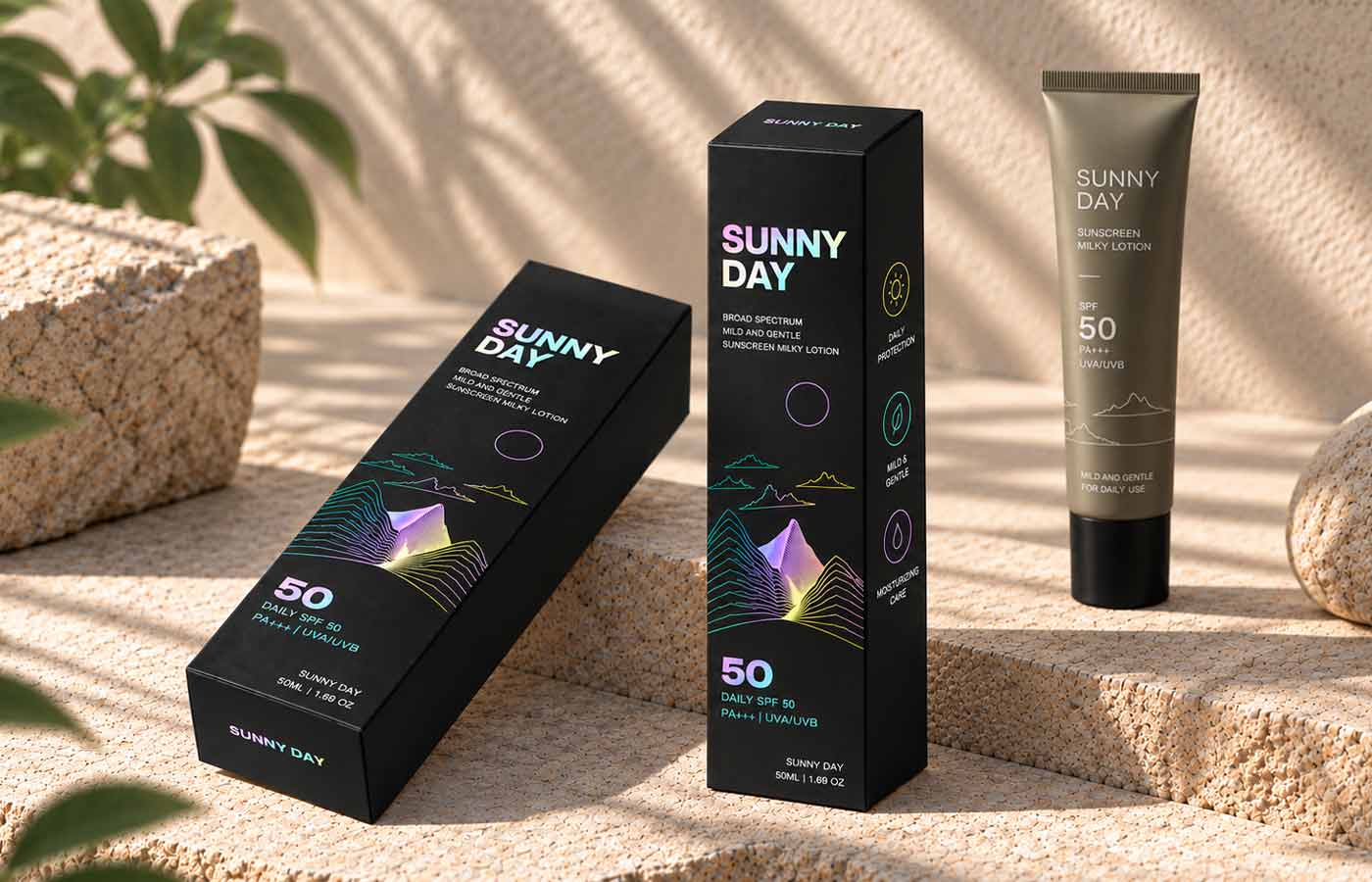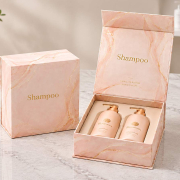
When planning a packaging project, understanding the custom box cost is an important first step. The price of a custom box depends on more than its size or appearance. Order quantity, materials, box structure, printing finishes, and custom inserts can all affect the final quote. Therefore, understanding these factors helps brands choose suitable packaging, manage their budgets, and avoid unnecessary expenses.
Whether you need folding cartons for retail products or rigid gift boxes for premium product collections, knowing how packaging costs are calculated makes purchasing decisions easier
1. MOQ and Order Quantity: How Many Boxes Should You Order?
How to Choose the Right Packaging Material for Your Product – IUPACKAGE
The minimum order quantity (MOQ) is the smallest number of boxes a supplier accepts for a production order. For custom packaging, MOQ and order quantity can significantly affect the price per box.
Why Does the Unit Price Decrease with Larger Orders?
Custom packaging often involves fixed preparation costs, such as printing setup, die-cutting preparation, and production adjustments. When these costs are spread across more units, the cost allocated to each box usually decreases.
For example, ordering 500 boxes may result in a higher unit price than ordering 1,000 or 3,000 boxes with the same specifications. However, the total order cost will increase as the quantity grows.
How Should You Choose Your Order Quantity?
500 boxes: A practical starting point for smaller launches or testing market demand.
1,000 boxes: A potential balance between unit cost and inventory investment.
3,000 boxes or more: Larger production runs may reduce the unit cost when specifications remain unchanged.
These quantities are examples, not fixed pricing tiers. Actual MOQ and unit prices depend on the packaging structure, materials, production requirements, and supplier capabilities.
Key takeaway: A lower unit price does not always mean a better deal. Choose an order quantity that matches your sales forecast and available budget.
2. Box Size and Structure: More Than Just Dimensions
The size and structure of a custom packaging box affect material consumption, production processes, and shipping requirements. Even small design changes can influence the final cost.
How Box Size Affects Custom Box Cost
Larger boxes generally require more paperboard or wrapping paper. In addition, their dimensions may affect how efficiently materials can be arranged during production.
Oversized packaging can also increase storage and transportation costs. For this reason, matching the box dimensions to the actual product is a useful way to avoid unnecessary material use.
How Different Box Structures Affect Pricing
Different packaging structures require different materials and manufacturing processes.
Folding cartons: Lightweight, easy to store flat, and commonly used for retail packaging.
Rigid boxes: Made with thick paperboard and wrapped with printed or specialty paper, often requiring additional wrapping and assembly.
Magnetic rigid boxes: Include a hinged lid and magnetic closure, adding components and assembly steps.
Drawer boxes: Combine an outer sleeve with a sliding inner tray, requiring additional structural components.
The best option depends on your product, protection requirements, presentation goals, and budget. A more complicated structure is not necessarily better if a simpler box can meet the same needs.
3. Packaging Materials: Paperboard, Rigid Board, and Specialty Paper
Material selection is another major factor affecting custom box cost. Different papers and boards vary in thickness, surface finish, strength, and price.
Folding Carton Materials
Folding cartons commonly use paperboard selected according to the product’s weight, printing requirements, and intended use. Different board grades and thicknesses can affect both material costs and box performance.
For lightweight retail products, an appropriately specified folding carton may provide sufficient protection without the additional cost of a rigid structure.
Rigid Box Materials
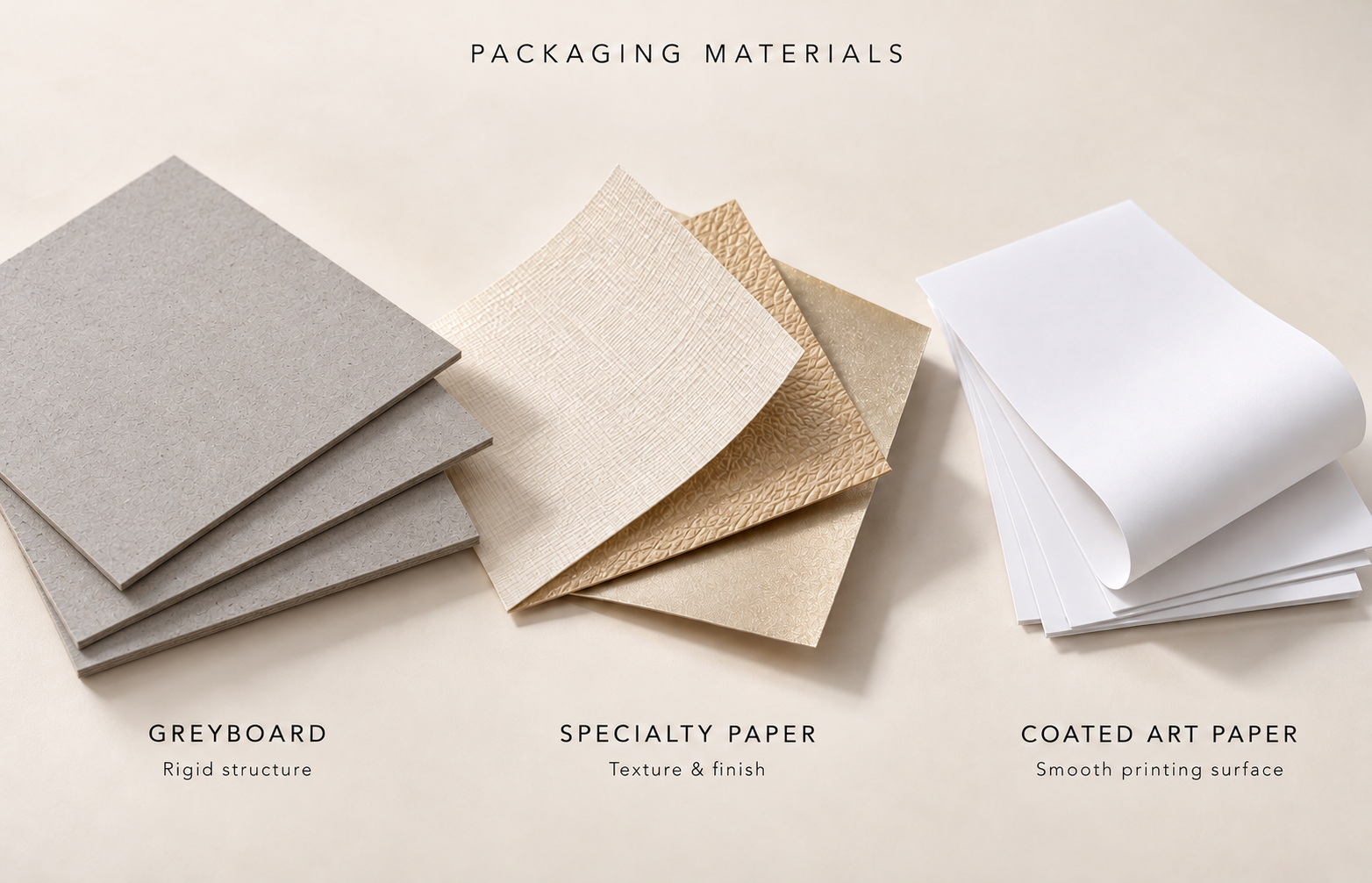
Rigid boxes typically use greyboard wrapped with printed art paper or specialty paper. The board thickness, box dimensions, and wrapping material all contribute to the final price.
Specialty papers, textured papers, and metallic papers can create distinctive visual effects. However, these materials may cost more than standard wrapping paper.
How Can You Choose Materials More Efficiently?
Start with the product’s actual requirements. Fragile or heavier products may need stronger structures, while lightweight items may work well with folding cartons.
Meanwhile, discuss material alternatives with your packaging supplier. The goal is to find a suitable balance between appearance, protection, durability, and cost rather than choosing the most expensive material by default.
4. Printing and Finishes: Which Details Increase the Cost?
Printing and surface finishes help packaging communicate brand identity. However, additional processes can increase production costs, especially when several techniques are combined.
Common Printing and Finishing Options
CMYK printing: Suitable for multicolor artwork, illustrations, and product information.
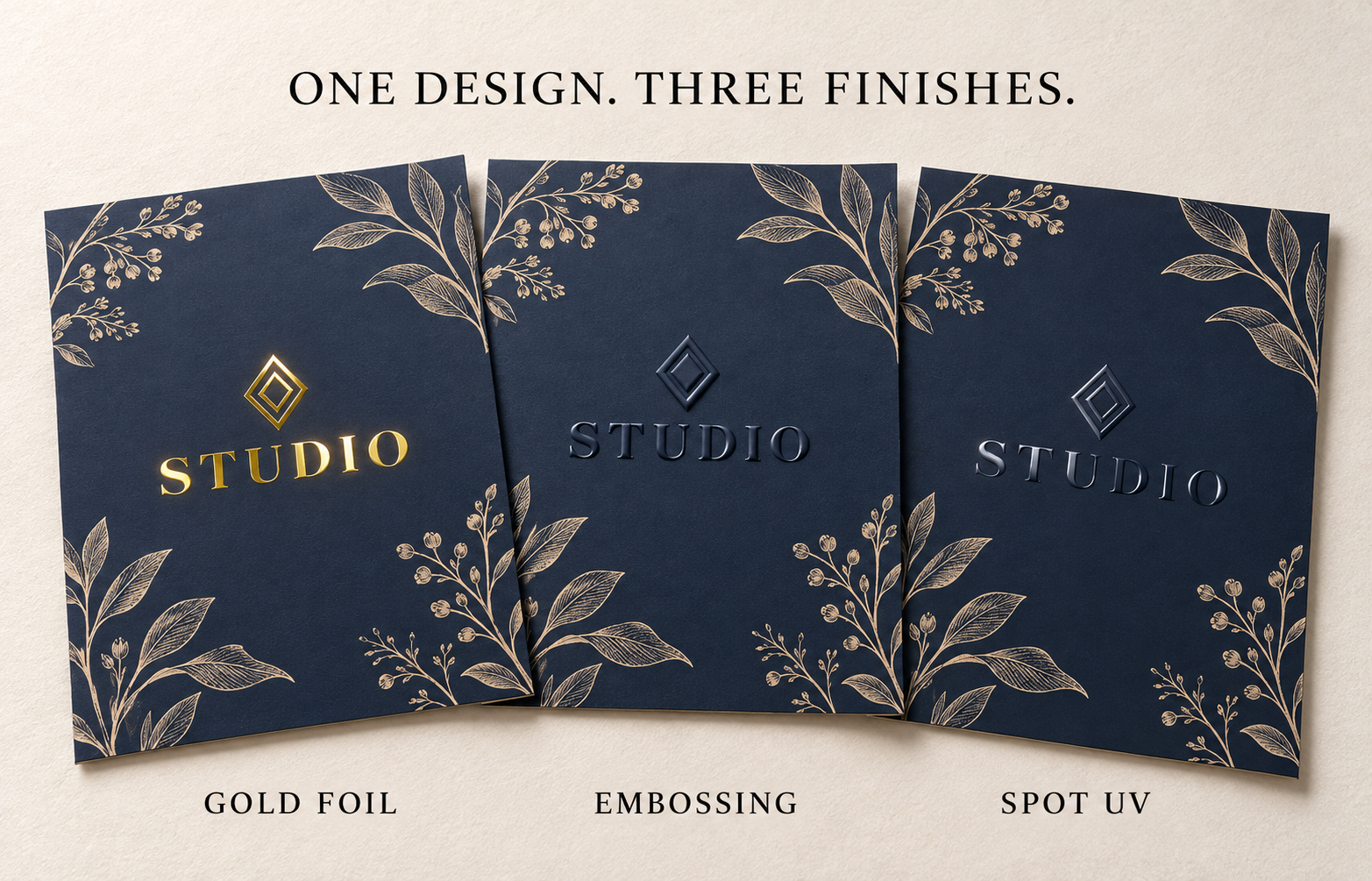
Hot foil stamping: Adds metallic details, such as gold, silver, or other foil colors.
Embossing and debossing: Creates raised or recessed patterns on the packaging surface.
Spot UV: Adds gloss to selected areas, creating contrast with surrounding surfaces.
Lamination: Provides a surface layer that changes the appearance and feel of the printed paper.
The cost depends on the chosen technique, artwork coverage, tooling requirements, and production complexity.
How Can You Control Finishing Costs?
Rather than applying every available technique, identify the design elements that matter most to your brand.
For example, gold foil stamping on a logo may create a clear focal point without requiring foil across the entire box. Similarly, a textured specialty paper may provide enough visual interest without several additional finishes.
As a result, carefully selected details can create a distinctive package while keeping production requirements manageable.
Custom Inserts: Protection, Presentation, and Budget
Custom inserts affect both the functionality and cost of packaging. They keep products in position, separate multiple items, and improve the way a product is presented when the box is opened.

Common Types of Packaging Inserts

EVA Foam Inserts
EVA foam can be cut to fit specific product shapes. It is often used for electronics, accessories, perfume bottles, and gift sets that require secure positioning.
Paperboard Inserts
Paperboard inserts can create compartments or support products inside a box. They are often suitable for cosmetics, lightweight products, and multi-item gift sets.
Molded pulp inserts are formed from paper fibers and can be shaped around product dimensions. They offer a paper-based alternative to certain plastic trays.
Plastic Blister Inserts
Plastic blister trays can be formed to match specific product shapes and are commonly used for retail display packaging.
What Affects the Cost of a Custom Insert?
The insert material, number of compartments, shape complexity, tooling requirements, and production quantity all influence the cost.
For this reason, provide accurate product dimensions and, where possible, product samples before finalizing the insert design. A well-fitted insert can help reduce product movement without using unnecessary material.
When sustainability is a priority, paperboard or molded pulp may be worth considering. However, the most appropriate option depends on protection needs, product shape, material composition, and the recycling systems available in the target market.
6. Other Costs Buyers Should Consider
The quoted box price is only one part of the total packaging expense. Depending on the project, other costs may affect your overall budget.
Sampling and Tooling
A custom sample allows you to check dimensions, structure, appearance, and product fit before mass production. Depending on the project, sampling, printing preparation, or special tooling may involve separate charges.
Ask your supplier which costs are included in the quotation and which are charged separately
Shipping and Storage
Packaging size and structure can influence freight costs and warehouse space. For example, folding cartons are shipped flat, while many assembled rigid boxes occupy more volume.
Consequently, a box with a lower manufacturing price may not offer the lowest overall cost once transportation and storage are considered.
Assembly and Product Packing
Some packaging structures require more manual assembly or product placement than others. This is particularly relevant for multi-piece gift sets, complex inserts, and collapsible rigid boxes.
Before making a decision, consider how the packaging will be assembled and packed at your facility or fulfillment center.
The key is to compare the total cost of using the packaging, not only the price of purchasing each box.
7. How to Get an Accurate Custom Box Quote
Providing clear specifications helps your supplier prepare a more accurate quotation and reduces unnecessary back-and-forth communication.
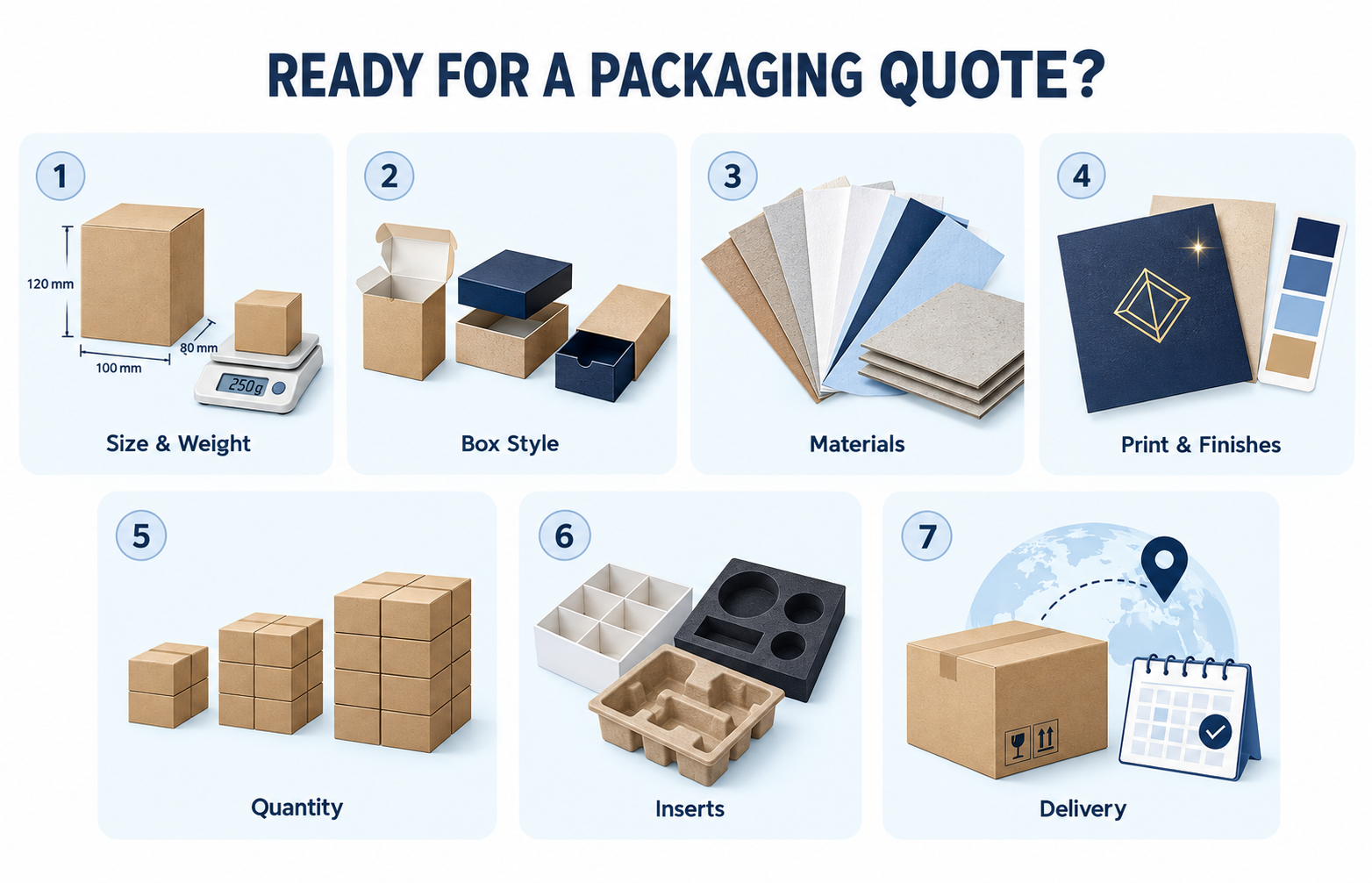
Before requesting a custom packaging quote, prepare the following information:
1.Product dimensions and weight: Include the size of the product and any accessories.
2. Box style:Share your preferred structure or a reference image.
3. Material requirements: Specify paperboard, rigid board, specialty paper, or other preferred materials if known.
4. Printing and finishes:Identify logo treatments, colors, and any special surface effects.
5. Order quantity: Provide your estimated quantity or ask for quotations at several quantity levels.
6.Insert requirements:* Explain whether you need foam, paperboard, molded pulp, or another insert.
7. Delivery requirements: Provide the destination and target delivery schedule.
If you do not have a finalized design, you can still start the discussion with product photos, dimensions, preferred colors, and a target budget. An experienced packaging supplier can help assess possible structures and materials.
8. How IU PACKAGE Helps You Plan Custom Packaging Costs
At IU PACKAGE, we manufacture custom paper packaging for brands across cosmetics, skincare, perfume, electronics, wine, and other industries.
Our packaging solutions include folding cartons, rigid boxes, magnetic boxes, drawer boxes, mailer boxes, and customized paper-based inserts. Based on your product dimensions, order quantity, branding requirements, and protection needs, we can help identify suitable packaging options.
We also support customized printing and finishing, including foil stamping, embossing, debossing, and UV effects. By reviewing these specifications before production, buyers can make more informed decisions about the relationship between packaging design, functionality, and budget.
To start a quotation, share your product details, reference images, estimated quantity, and delivery destination. If you are still exploring design options, our team can discuss suitable packaging structures and customization possibilities with you.
Conclusion: Choose the Right Box, Not Just the Lowest Price
The cost of a custom box depends on several connected factors, including order quantity, size, structure, materials, printing finishes, inserts, and delivery requirements.
Although increasing order quantity may reduce the unit price, larger orders also require more upfront investment and storage space. Likewise, additional finishes and complex structures may improve product presentation, but they should serve a clear purpose.
By comparing the complete packaging requirements and total costs, you can choose a solution that fits your product, brand, and budget.
Need a custom packaging quote? Prepare your product dimensions, preferred box style, estimated quantity, and design references to help your packaging supplier recommend a suitable solution.