How Molded Pulp Inserts Support Sustainable Packaging Under the EU PPWR Regulation
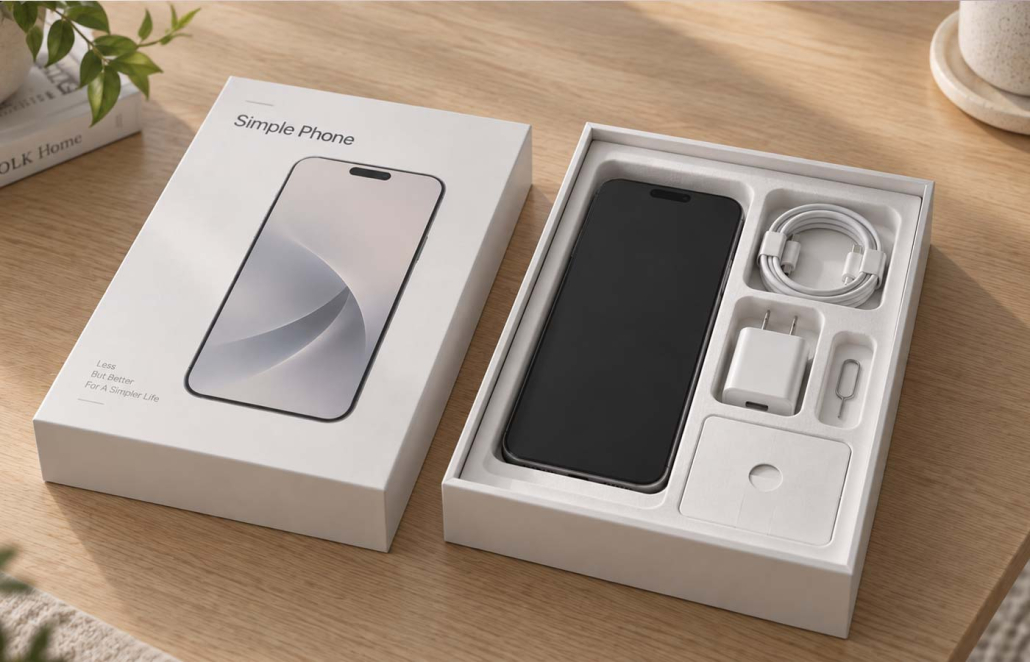
As sustainability requirements continue to grow in Europe, packaging design is facing new challenges. Brands are not only focusing on appearance and protection, but also paying more attention to recyclability, material selection and environmental impact.
With the introduction of the European Packaging and Packaging Waste Regulation (PPWR), companies are exploring new packaging solutions that reduce unnecessary materials and improve recycling performance.
For many product categories, replacing traditional plastic trays with molded pulp inserts has become an effective way to create more sustainable packaging.
What Is the EU PPWR and Why Does It Matter for Packaging?
The Packaging and Packaging Waste Regulation (PPWR) is a new European regulation designed to reduce packaging waste and improve packaging sustainability across the EU.
Compared with previous packaging policies, PPWR places greater attention on:
Packaging recyclability
Material reduction
Waste prevention
Sustainable packaging design
This means brands need to rethink not only the outer packaging, but also the internal components used to protect products.
Why Are Brands Looking for Alternatives to Plastic Inserts?
For many years, plastic trays such as PVC and PET inserts have been widely used because they are lightweight and easy to shape.
However, multi-material packaging can create challenges during recycling.
For example:
A paper box combined with a plastic tray contains different materials that may require separation before recycling.
As a result, many brands are exploring paper-based alternatives that can provide protection while simplifying packaging materials.
Molded Pulp Inserts: A Paper-Based Packaging Solution
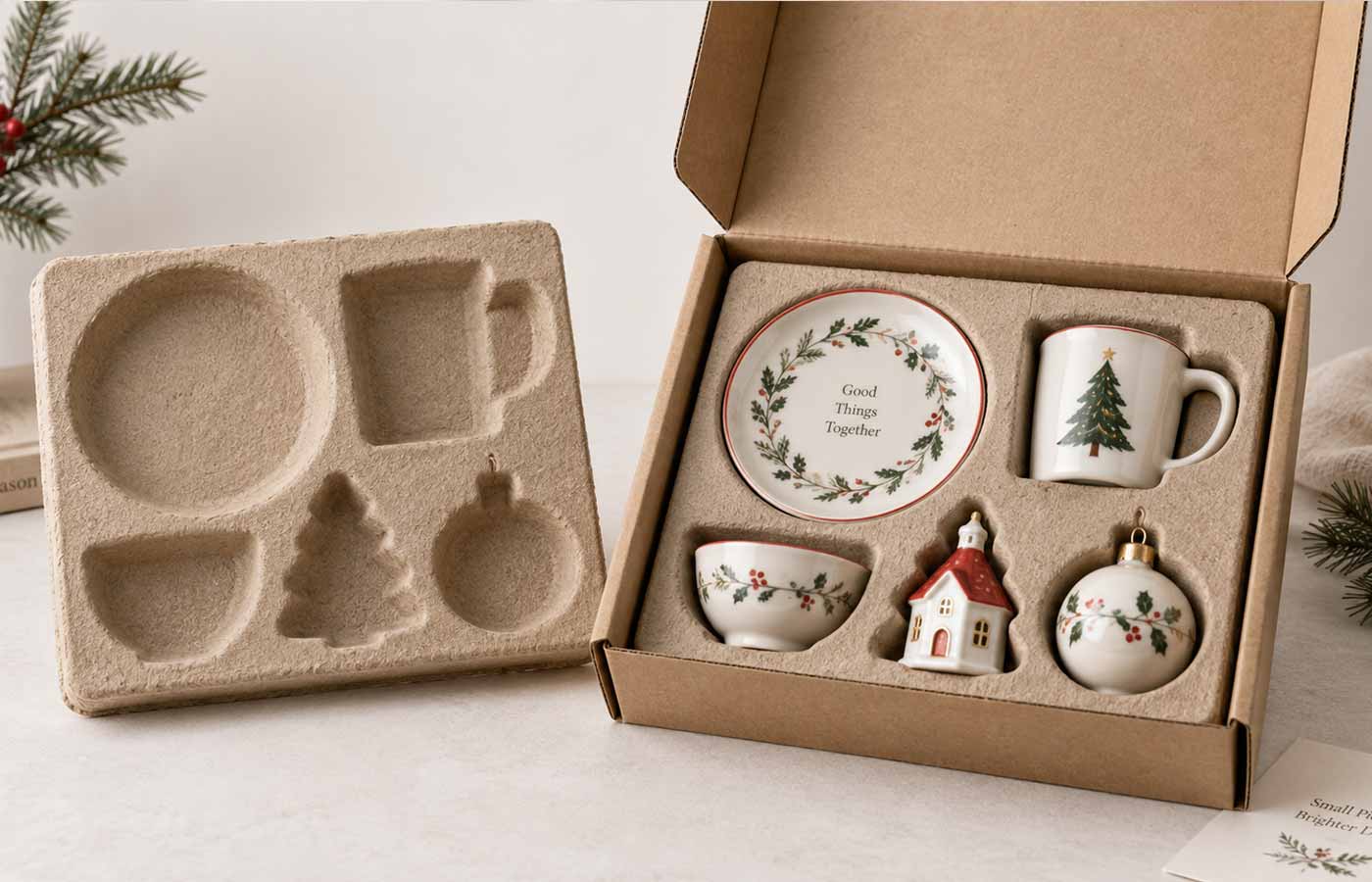
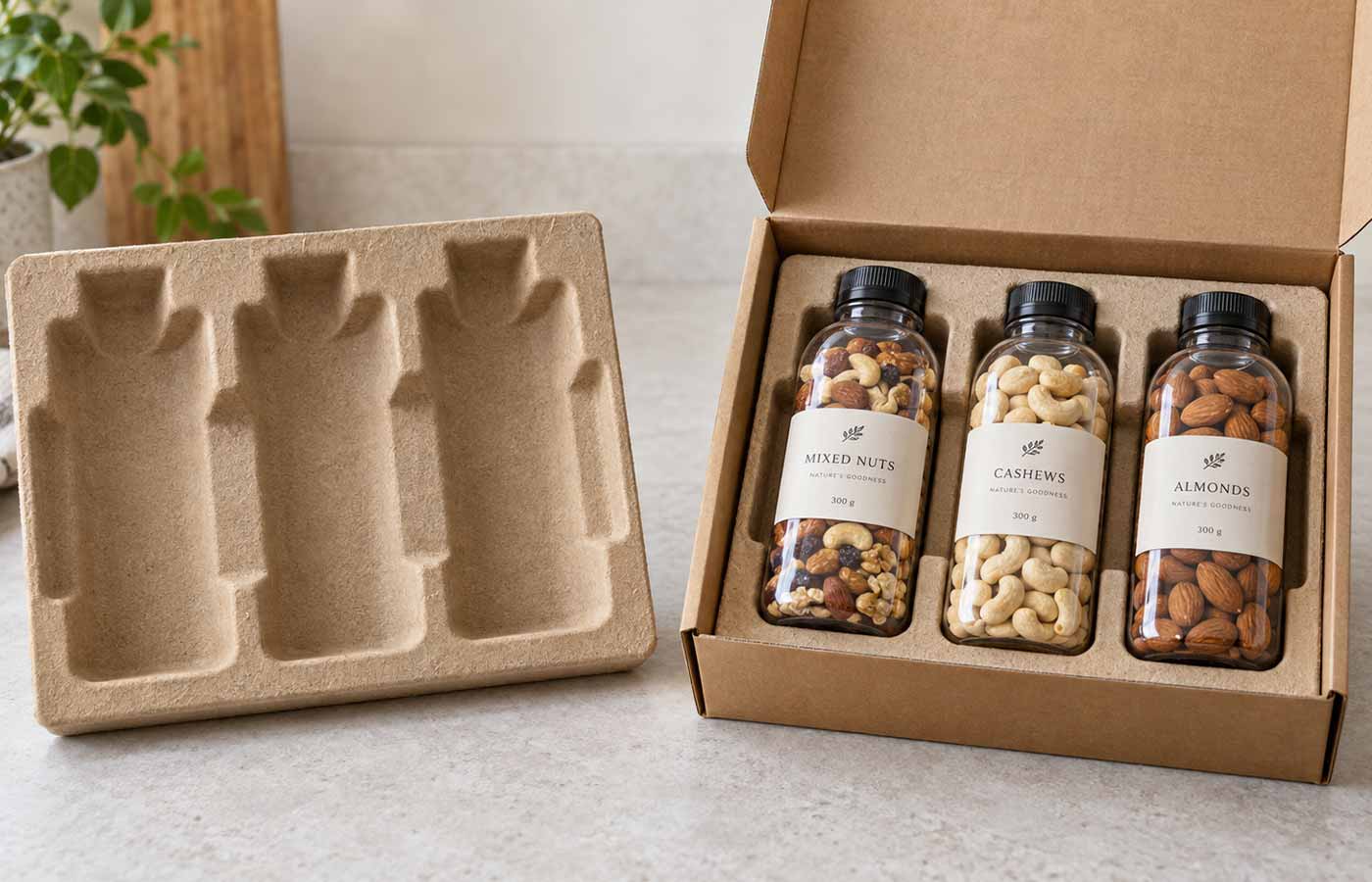
Molded pulp inserts, also known as molded fiber trays, are made from formed paper fibers.
They can be customized into different shapes according to product dimensions, providing secure positioning and protection.
Compared with traditional plastic trays, molded pulp inserts offer several advantages:
Paper-Based Material:Molded pulp inserts are made from paper fiber materials, creating a packaging solution that aligns with paper-based packaging trends.
Custom Product Protection:The insert can be molded according to the product shape, helping prevent movement during transportation.
Reduced Plastic Usage:By replacing plastic trays, brands can reduce the amount of plastic used in packaging.
Applications of Molded Pulp Inserts
Molded pulp inserts are suitable for various industries, including:
Cosmetics & Skincare Packaging:For skincare sets, bottles, jars and beauty products, molded pulp inserts provide organized product placement while maintaining a natural packaging appearance.
Electronics Packaging:For headphones, accessories and small electronic products, molded pulp trays provide cushioning and structural support.
Toy Packaging:For children’s toys and educational products, molded pulp inserts offer product organization while supporting plastic-free packaging concepts.
Gift Packaging:For premium gift sets, paper-based inserts can create a clean and coordinated unboxing experience.

How Brands Can Prepare for Sustainable Packaging Trends
Moving toward sustainable packaging does not mean sacrificing design and functionality.
A successful packaging solution should balance:
Product protection
Brand appearance
Material selection
Recycling considerations
By combining custom paper boxes with molded pulp inserts, brands can create packaging that meets modern consumer expectations while adapting to future packaging trends.
Conclusion
The EU PPWR trend is encouraging brands to rethink packaging materials and structures.
For companies looking to reduce plastic usage and improve packaging sustainability, molded pulp inserts provide a practical paper-based alternative.
As a custom paper packaging manufacturer, IU PACKAGE provides customized packaging solutions including paper boxes, folding cartons, rigid boxes and sustainable insert options to help brands develop packaging for future markets.
