How to Compare Custom Packaging Quotes Beyond Unit Price
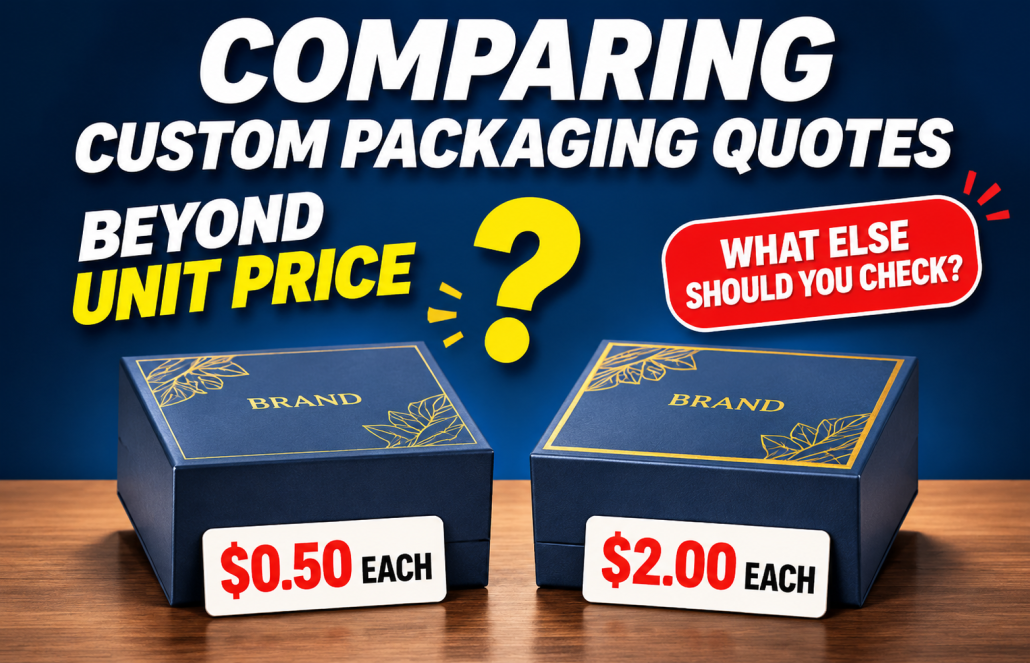
The Lowest Quote Isn’t Always the Best Deal
When sourcing custom packaging, it’s natural to compare prices from several suppliers. You may receive three quotations for what appears to be the same packaging box, only to find that one supplier offers a much lower price than the others.
But are you really comparing the same product?
One quotation may include thicker rigid board, custom inserts, and special finishing, while another may use thinner materials, simpler construction, or exclude certain production costs.
The difference may not be obvious on the quotation sheet, but it can become clear when you receive the samples or the finished products.
A lower unit price doesn’t necessarily mean lower overall costs. Differences in material quality, packaging protection, production consistency, and shipping arrangements can all affect your final purchasing decision.
In this guide, we’ll explain what to check when comparing custom packaging quotes, how to identify hidden cost differences, and how to choose a supplier based on both price and quality.
Make Sure You’re Comparing the Same Packaging Specifications
Before comparing prices, check whether every supplier is quoting the same packaging specifications.
Even small differences in specifications can affect the final price.
Here are the key details to confirm:
**Box Structure**
Is the quotation for a folding carton, rigid box, magnetic closure box, drawer box, or collapsible rigid box?
Different structures require different materials, production processes, and labor costs.
For example, a rigid magnetic box generally requires more material and manual assembly than a standard folding carton.
Box Dimensions
Compare the exact internal and external dimensions.
A larger box usually requires more paperboard and wrapping material. It may also increase the size of the shipping carton, affecting transportation costs.
Material Thickness
Check the material specifications rather than simply accepting descriptions such as “thick paper” or “strong cardboard.”
For rigid boxes, the thickness and grade of greyboard affect the box’s structure and rigidity. For folding cartons, paperboard type and grammage influence stiffness and folding performance.
Printing and Surface Finishing
Make sure all quotations include the same printing and finishing requirements, such as:
– CMYK or Pantone printing
– Matte or gloss lamination
– Gold or silver foil stamping
– Embossing or debossing
– Spot UV
A quotation without special finishes should not be compared directly with one that includes them.
Check whether the insert is included and whether it uses the same material and construction.
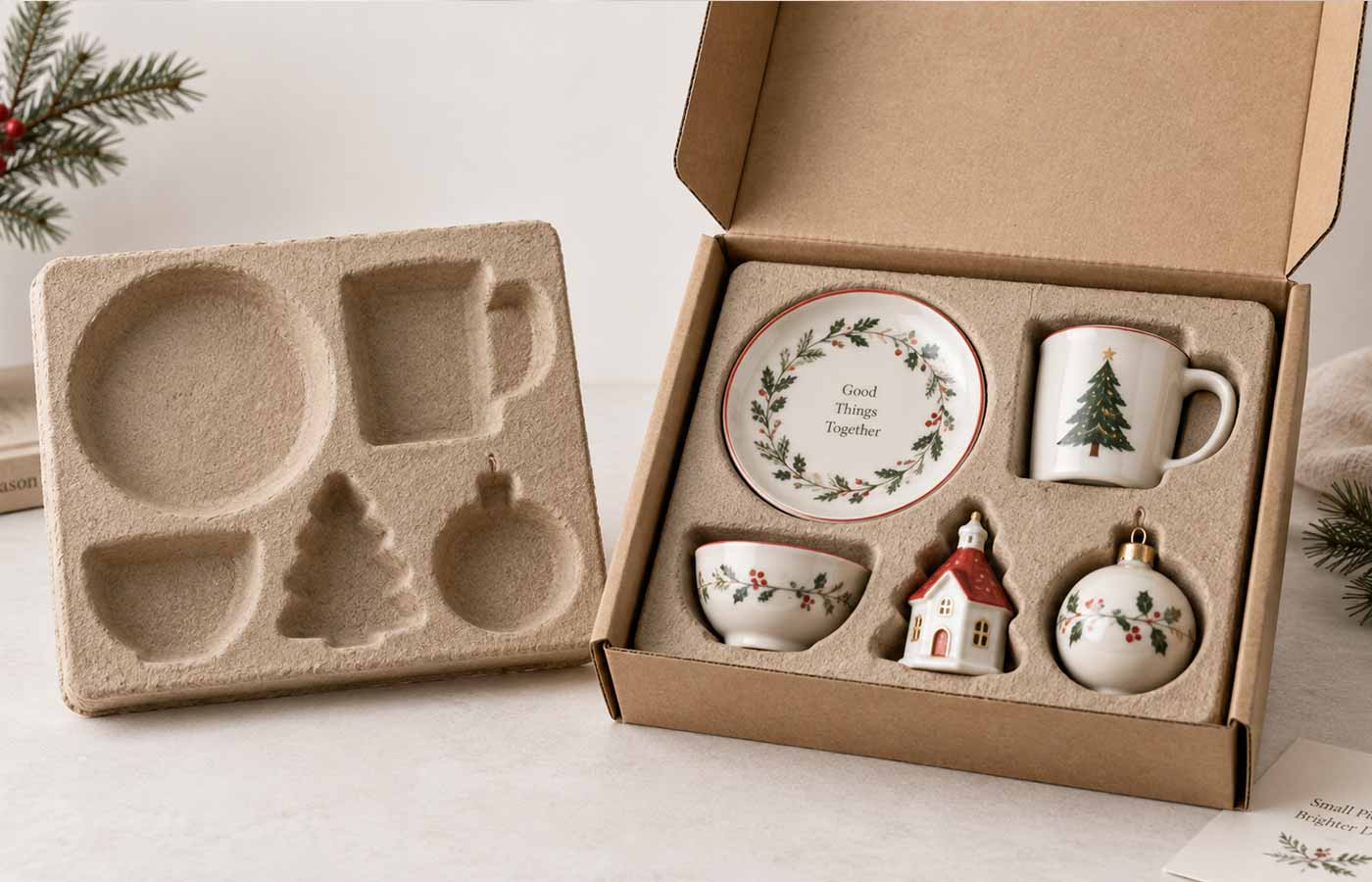
For example, an EVA foam insert, paperboard insert, and molded pulp insert have different costs and protective properties.
The key is simple: compare identical specifications before deciding which supplier offers the better price.
Look Beyond the Box: Are the Inserts Really the Same?
The insert is often one of the most overlooked parts of a packaging quotation.
For products such as perfume bottles, skincare sets, glassware, electronics, and gift sets, the insert does more than keep the product in place. It helps prevent movement, reduces the risk of damage, and determines how the product is presented when the box is opened.
However, different insert materials and structures can create significant price differences.
Common options include:
EVA Foam Inserts
EVA foam is commonly used for products that require a snug fit and cushioning. It can be cut into specific shapes to hold individual products securely.
Paperboard Inserts
Paperboard inserts can create separate compartments for multiple products. They are lightweight and can be designed to match the box’s appearance.
Molded pulp inserts can be formed around specific product shapes and are an option worth considering for brands exploring fiber-based packaging solutions.
When comparing quotations, ask:
– Are the insert materials identical?
– Are the dimensions and cutouts the same?
– Does the insert hold the product securely?
– Is the insert included in the quoted price?
A cheaper quotation may simply include a different insert solution.
The right choice should depend on your product’s weight, shape, fragility, presentation requirements, and budget.
Check What’s Included in the Quotation
A packaging quotation may cover more than the unit price of the box itself.
Some suppliers include additional services and costs, while others list them separately.
Before comparing quotations, check the following items:
- Cost Item
- Box production
- Custom inserts
- Printing and finishing
- Sampling
- Tooling and die-cutting
- Inner and outer packaging
- Shipping
- What to Confirm
- Does the unit price include all box components?
- Are inserts included in the quotation?
- Are all requested finishes included?
- Is there a separate sample charge?
- Are any setup or tooling fees required?
- Are protective packing materials included?
- Is transportation included or quoted separately?
For example, Supplier A may offer a lower unit price but charge separately for inserts, sampling, and shipping.
Supplier B may have a higher unit price but include more items in the quotation.
Without checking the full cost breakdown, it’s easy to misunderstand which supplier actually offers better value.
Don’t Judge Quality by the Quotation: Check the Actual Sample
A quotation tells you what the supplier plans to produce. A physical sample shows you what the packaging actually looks and feels like.
Before approving mass production, it’s worth checking the sample carefully.
Here are five areas to focus on:
1. Box Construction
Check whether the box maintains its shape, whether the corners are properly finished, and whether the lid or closure fits correctly.
2. Material Quality
Feel the paper surface and check the rigidity of the board. Look for uneven wrapping, visible creases, or other construction defects.
3. Printing Accuracy
Compare the printed colors with your approved artwork or color reference. Check whether text, logos, and graphics are positioned correctly.
4. Surface Finishing
Inspect foil stamping, embossing, debossing, and UV coating. Make sure the finishes are clearly visible and applied consistently.
5. Insert Fit
Place your actual products inside the sample. Check whether they fit properly, remain stable, and can be removed easily.
A sample that looks good in a photograph may not perform as expected in actual use.
Whenever possible, approve a physical sample before mass production and use it as the reference for the final order.
Compare Lead Times and Shipping Conditions
Price is only one part of your purchasing decision. Delivery arrangements can also affect your overall costs and supply chain planning.
Production Lead Time
Ask each supplier how long they need for sampling and mass production.
Make sure the quoted timeline includes the same stages. For example, one supplier may quote production time only, while another may include sampling and approval.
Shipping Method
Confirm whether the quotation is based on sea freight, air freight, or another transportation method.
The shipping cost depends on factors such as shipment volume, weight, destination, and delivery schedule.
Shipping Terms
Check the quoted Incoterms, such as:
– EXW: The buyer arranges collection from the supplier’s premises.
– FOB: The supplier handles the required export arrangements up to the agreed loading point.
– CIF: The seller covers cost, insurance, and freight to the named destination port.
– DDP: The seller arranges delivery to the agreed destination, including applicable import duties and taxes under the agreed terms.
These terms determine which costs and responsibilities belong to each party.
A lower FOB quotation, for example, cannot be directly compared with a DDP quotation because the included services are different.
Calculate the Total Cost, Not Just the Unit Price
To make a fair comparison, look at the total purchasing cost rather than focusing only on the price of one box.
Consider a simple example:
Two suppliers offer quotations for 1,000 custom rigid boxes.
- Cost Item
- Unit price
- Box quantity
- Box production
- Insert cost
- Sample cost
- Shipping
- Total cost
- Supplier A
- $2.00
- 1,000
- $2,000
- $200
- $100
- $400
- $2,700
- Supplier B
- $2.30
- 1,000
- $2,300
- Included
- $100
- $300
- $2,700
Although Supplier A offers a lower unit price, the total purchasing costs are the same in this example.
This is why you should evaluate the Total Cost of Ownership (TCO), not just the quoted unit price.
Depending on your project, TCO may also include storage, assembly labor, product damage, replacement packaging, and other costs.
A slightly higher unit price may be worthwhile if it provides better product protection, more consistent quality, or more efficient logistics.
How IU PACKAGE Helps You Balance Cost and Quality
Choosing a packaging supplier is not just about finding the lowest price. It’s about finding a manufacturer that can deliver consistent quality, reliable service, and competitive pricing.
At IU PACKAGE, we believe cost optimization should never come at the expense of product quality.
We don’t compete by simply offering the lowest price. Instead, we focus on delivering the right quality at a competitive price.
Our approach is to find practical ways to manage packaging costs while maintaining the agreed material standards, construction requirements, and finishing quality.
Consistent Manufacturing Quality
With over 15 years of packaging manufacturing experience, we pay close attention to material selection, printing accuracy, surface finishing, and box construction.
Our production capabilities include offset printing, die-cutting, foil stamping, lamination, UV finishing, and other packaging processes.
We focus on maintaining consistency between approved samples and mass production.
Practical Cost Optimization
We help customers evaluate different box structures, materials, and insert solutions according to their products and budgets.
Rather than automatically choosing cheaper materials, we look for ways to simplify unnecessary costs while keeping essential packaging performance and appearance.
Sample Development Before Mass Production
Customers can review physical samples before approving bulk production.
Our team can assist with packaging structure development, dielines, and 3D mockups to help confirm the design before production begins.
One-Stop Packaging Solutions
We provide more than individual packaging boxes.
Our product range includes:
– Custom product gift boxes
– Folding cartons and rigid boxes
– Retail display boxes
– Corrugated shipping boxes
– Custom paper inserts
– Product labels and stickers
– Printed cards and other packaging materials
This allows customers to source multiple packaging components through one manufacturing partner, making communication and purchasing more straightforward.
Our standard MOQ generally starts at 500 pieces, with sampling typically taking 3–7 days and mass production around 12–18 days after specifications and samples are confirmed. Actual timelines depend on the project requirements.
Our goal is simple: to help you get packaging that meets your quality expectations at a competitive and reasonable cost — not just a lower price on paper.
If you’re comparing packaging quotations or planning a new packaging project, send us your specifications, reference images, and estimated quantity. Our team will help you evaluate the options and prepare a quotation based on your actual requirements.
